Saturday, 19 March 2016

Trims added

I have got the trims added ready to start the bricks.


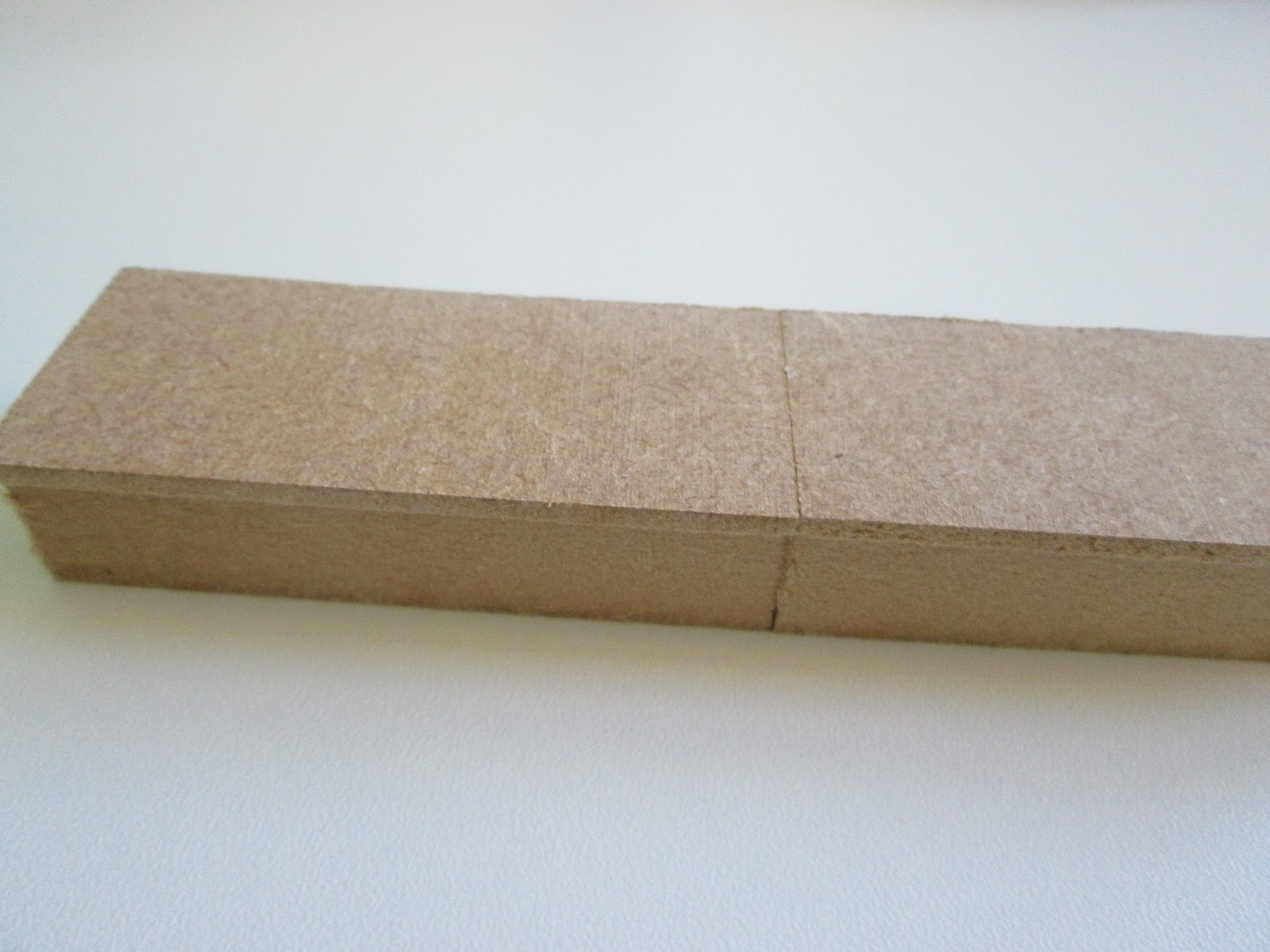
This trim was a slightly warped very thick piece of wood so it needed to be clamped on while the glue dried overnight.  I apply my favourite Deluxe glue that I keep mentioning (R/C Modellers Craft Glue) and let it set up a little - just a couple of seconds.  While that's happening I add a few drops of Superglue Gel (only use the gel sort, not the ordinary Superglue, this way you have control of the stuff).  Superglue pulls the surfaces together quickly so they are in good contact while the rest of the glue dries.


The doorway and the basement areas are not fixed and won't be until the bricks are finished.  I have also added a further much narrower trim across the house walls at ground floor level.


The door was a pig to do.  I had a horrible time just painting it.  I tried gloss acrylic - too shiny!  I tried silk acrylic - too matt!  In the end after three coats of messing about and rubbing down in between I applied a silk water based (B & Q) varnish over the remaining black paint which seems about right.  Sounds like a Goldilocks story.

You probably figured this is the outside as it has a door-knocker.  It also has the traditional large Georgian centre knob and a 'modern' Yale lock.  It may never have a letterbox - some listed buildings aren't allowed them as the original would not have had one.  I may get tempted if I see a nice one though.  It needs to have a back flap for the inside of the door (draught stopper)otherwise I will have to cut a hole through. 


On the inside there is the reverse of the Yale lock and, instead of a large bolt, it has a modern version of the traditional Georgian door lock.  This is locked at night.  Both locks have the other halves of the locks to go in the door trim when it is applied. The large deadlock will have a keyhole on the outside of the door when I can find a suitable escutcheon.


This is a 'shim' which was needed to get the door to fit properly.  Not as simple as just a strip of wood.  There was much filing and scribing and shaping to fill the gap.

Saturday, 12 March 2016

Painting

Apologies for this week's post being late - now Monday and should have posted on Saturday.  Just spotted it was still in the draft box - woops!!

There is always a fair bit of painting to do in this hobby one way or another.  Here is the next lot needed to complete the front opening.


This shows the camouflage effect that I like to do for the mortar under the brick so I don't get a single dominant colour showing between the bricks.  You can get the 'mucky' colours just by mixing up any old bits of paint you don't want - the more you add the muddier it gets.


The roof was painted grey to go under the 'slate' roof tiles.  I also paint the edges of the roof panel grey.  Again this grey came from mixing two or three dark coloured paints.


The doorway is mostly stonework painted with my home-made mortar paint (sand added to any colour you fancy).  I do knock off some of the obvious sand when the paint is bone dry.  the trim round the door is painted white. I used Cuprinol Shades here.  It goes on thinly and gives a flattish sort of gloss finish.  It is a real world paint which is sold for outside wood use so it should wear well!  It also comes in a lovely range of colours.


Here's a closer look at the masonry paint finish.  if there are too many 'bobbles' for you, when it is dry just rub them off and you end up with a nice in-scale masonry finish.


The edges of the main doors need painting.  I have chosen to do them with the brick coloured paint I have used on the sides.  Always smooth the edges of the doors before you paint them with a fine grade
 sanding block or fine sandpaper.  It is 'end grain' so it will soak up the paint like a sponge.  You can put a priming coat on or a coat of sealant.  Personally I reckon if you are willing to paint it twice like that, you may as well just put on two coats of the paint you've chosen for the edges


.

The inside walls then need masking tape on them before you paint the edge of the wood, so you don't end up with a stack of 'sputters' to deal with when you come to decorate the inside of the house front.  It also lets you paint a lot faster as you don't need to be super careful.


This is what the first coat of the edge painting looks like.  The colour which matches the bricks brilliantly is called Polo Pony by Valspar (B & Q and others).  They will mix you a sample pot.  It looks hellishly orange but I assure you it is a good match.


Same colour on the sides of the building.  There is no logic to applying bricks there.  It is a huge area (times two) and would take masses of bricks, time and money.  This is a terrace so technically we are simply looking at a crude slice between two buildings.  It doesn't warrant bricks.

The magazine pages are taped down to protect the top of the trolley as the house was too heavy for me to lift and put on paper.

Incidentally, if you do want buy this house from DHD, these walls have a window on each floor - I got them to cut mine without as I want fireplaces there.  

Saturday, 5 March 2016

Paving and steps

I decided to make my life simple and just grey paint any pavement or step areas as I could not figure out a way to finish them without adding weight.  The versi bricks and slates are great and there is some flooring in the range but not grey versi paving stones.  Richard Stacey sells lovely real stone slabs but, as I said, it would add weight to an already heavy front.

I painted all the 'grey' areas very carefully and beautifully and then came up with this wheeze which I think looks OK.  It would look even better if I could 'dirty' it up and add moss and the odd weed.  Not a talent I have.......... as yet........nothing stopping me doing it much later in my house's life when I have nothing else to do.  I wish someone would do a 'dirty-it-up' class.


ashlar stone paper

cut into individual slabs and trimmed to size


border adhesive

If I am sticking any papers on my house I always use border adhesive.  Any make will do.  To be honest I think it is just PVA glue but it does seem silkier somehow?  Whatever it is, it is very strong and will bond the heaviest paper to wood or painted wood. Think this one was the cheapest B & Q sell but I am not sure about that as I have had it a long time.


I think the steps and pavement look much better 'slabbed' than they did painted:


slabbed steps

Notice that the pediments either side of the door now stand on the step.  Imagine if I hadn't added the step how odd they would look just floating around, not to mention an accident waiting to happen every time you stepped out of the door.

pretty good pavement???

top slab and front edge are made with separate papers so I could get in a full width slab

Saturday, 27 February 2016

One step short of a flight

I don't know what it is that I am not seeing/understanding but for me the front door on this house seems to be floating above the steps and looks like it needs another one.

I only had some interior stairs and they weren't wide enough.  I decided to glue three together and then trim them to fit but after gluing two together I thought I liked the look of the top step being different so I've left it at that.


when its finished you won't see the join under the paint and paper

needed to cut a piece off the back to get the depth right

It needed a bit cut off the back to get the depth right so using the above gear I clamped it to my bench and cut a little each day when I came into the hive.  You will gather the combination of that saw and my muscle didn't make a lot of impact on the thick step.  On day three my other half came into the hive with a cuppa for me.  I told him that by day three I had done about a quarter of the length, so he 'just finished it' on the way past!  There are days I wish I was Popeye.  More spinach anyone?

confusing photo?

Here it is in situ - it just reaches the bottom of the door opening so now my little folk can step right out onto a step and not a drop.

now for a change of mind

While I was messing around with all of that I realised just how much of the brickwork would be covered by chunks of basement.  I have again switched from the notion of bricking the whole front and then sticking on trims and basement to applying trims and working round where the basement will go.  I drew around all the areas that would be covered with steps and walls and basement floors.  I intend to brick close to these lines but then stick on the basement pieces (and pin them in place) and then finish off the bricks up to the edges of any added structures.  I hope that it means there will be lot of bricks and time saved.


Friday, 19 February 2016

Delph Miniatures - plug and socket for lamps

I have another huge favourite vendor called Delph Miniatures.  This is a mother and daughter team who can make just about anything 'modern' you might need.  A couple of her makes have been fish and chip shop fryers in two scales! and a mortuary fridge complete with body.  The creations are truly in the realms of, if you can think it Kath can make it.

I once asked her to make me a Yale lock and she did - I have just bought another for this project.  She also works in spot on 1/12th scale


 Kath (and Margaret) makes and sells single and double wall sockets waiting to be used around the house.  I believe she also makes the old brown Bakerlite type of electrical sockets used in houses well into the early sixties in this country.


There are a number of appliances you can buy already plugged in.  


So most electrical things that you don't want to light up are well covered by what she does.

However, I have a couple of table lamps and standard lamps which, in real life, would be plugged in.  I then needed to connect the wire to the electrical source so the lamps could be lit.  I couldn't see a sensible reason for traveling wires here and there and then having to conceal the fact that they weren't actually plugged in.

I came up with the wheeze of  getting some plugs in sockets from her and drilling below the plug and passing the wire through and then through the usual hole in the wall and on to the power source.  Within a couple of days here they are and pre-drilled by Kath all ready for me to use.  (The following pictures are a trial run mock up so not too elegant but will show you what I mean)

the scruffy bit round the hole is my fault they arrive just perfect

She even drilled the hole at a 45 degree angle to make the wire look more realistic


Here I have cut off the plug and threaded the wire through the socket

made a hole in a bit of scrap wood

The wire is then threaded through the hole in the room wall - this is just a bit of scrap wood not the real thing.

like threading beads
Pull gently into place and glue

et voila

There we have it a realistic lamp plugged into a realistic socket and will also light up!  I am sooooo happy.  Huge thanks Kath.

Contact her if you want any (or anything else).  Failing that I do urge you to check out her site and see the goodies she has.  She will be at the NEC Miniatura in April - I have my shopping list ready.

Click here:    Delph Miniatures

Saturday, 13 February 2016

Mud Room courtesy of ELF

Here comes what must be one of my top three vendors.... ELF Miniatures

If you look at the site it is described as modern miniatures and, yes, it is that in bucket loads.  This in itself is a rarity, BUT with a little imagination her flat pack kits can be tweaked and twiddled into a lot of other things - such as a Georgian linen press and a 19th century floor to ceiling cupboard in a shop - both of which I have used ELF for.

As I said the items are in flat pack kit form, BUT Elizabeth will make up things for you if required.  She also designs and cuts bespoke items - basically if you can dream it, she can produce it.  I think her prices belie the amount of work and time she commits to any project - in other words she is affordable.

Within a couple of days of sending a vague email about what I thought I wanted she had sent me not one but three design suggestions for my mud room.  I selected this one.


This room sits between the Hive (hobby room) and the children's Rec room.  Backed on to this room behind its back wall (invisible to us of course)  is the family's laundry with washer and dryer and linen storage.  This mud room is for anyone in the basement to make a cuppa or even a 'snack'.  It has a fridge and will have kettle and toaster.  This is to save kids and their friends trekking upstairs to the kitchen. It also has a washing machine and a very large sink for washing dirty stuff that they don't want to put in the laundry room washer.  Such things as muddy sports clothes, riding stuff etc can be washed here and the huge sink is terrific for muddy wellies football boots and the like.  It also sees its fair share of BBQ grill racks, plant pots and the like.  It is decidedly a mud room, not a utility room.

Here are the components needed to make the plan live:


work surface and lovely sink made to order by Elizabeth

cupboards and their trims

cupboard knobs, taps, rail for drip drying over sink

under cupboard strip lights

inside Miele fridge - removable racks and drawers

the fridge

Miele washer drum goes round, door opens using a lock switch (yellow) soap drawer opens

Miele washer, press the 'on'  button and it makes a washing/spinning noise and then the light flashes and it beeps to tell you the washing is done

Proper playtime!

Saturday, 6 February 2016

Pass me a hod

Here are the versi bricks and slates I told you about earlier.


4,000 bricks to apply !!

only 500 slates to get in place

for the ridges on the dormer windows

lead flashing for around the dormers

thought I would consider this

I don't tend to use paper for walls or floors though I have seen it done well.  With that in mind I thought I would consider this for the pavement and the areas (outside space) in the basement.  Very good quality - quite heavy and nicely matt.  I am tempted to cut up each paver though and stick in place?????


Here's the link:  Richard Stacey